Where do your loyalties ~lie~ 🤥
Two-way street — or double-edged sword?
I have, at long last, found something millennials have not ruined. (And it has nothing to do with avocado toast.)
You may have heard that millennials are far more likely than older generations to be job hoppers. Not so!
“There is virtually no evidence that Millennials change jobs more frequently than Generation X employees did when they were younger,” according to a report from the National Institute on Retirement Security. “Some research even indicates that Millennials are less likely to change jobs than Gen X and Baby Boomers were at the same stage of life.”
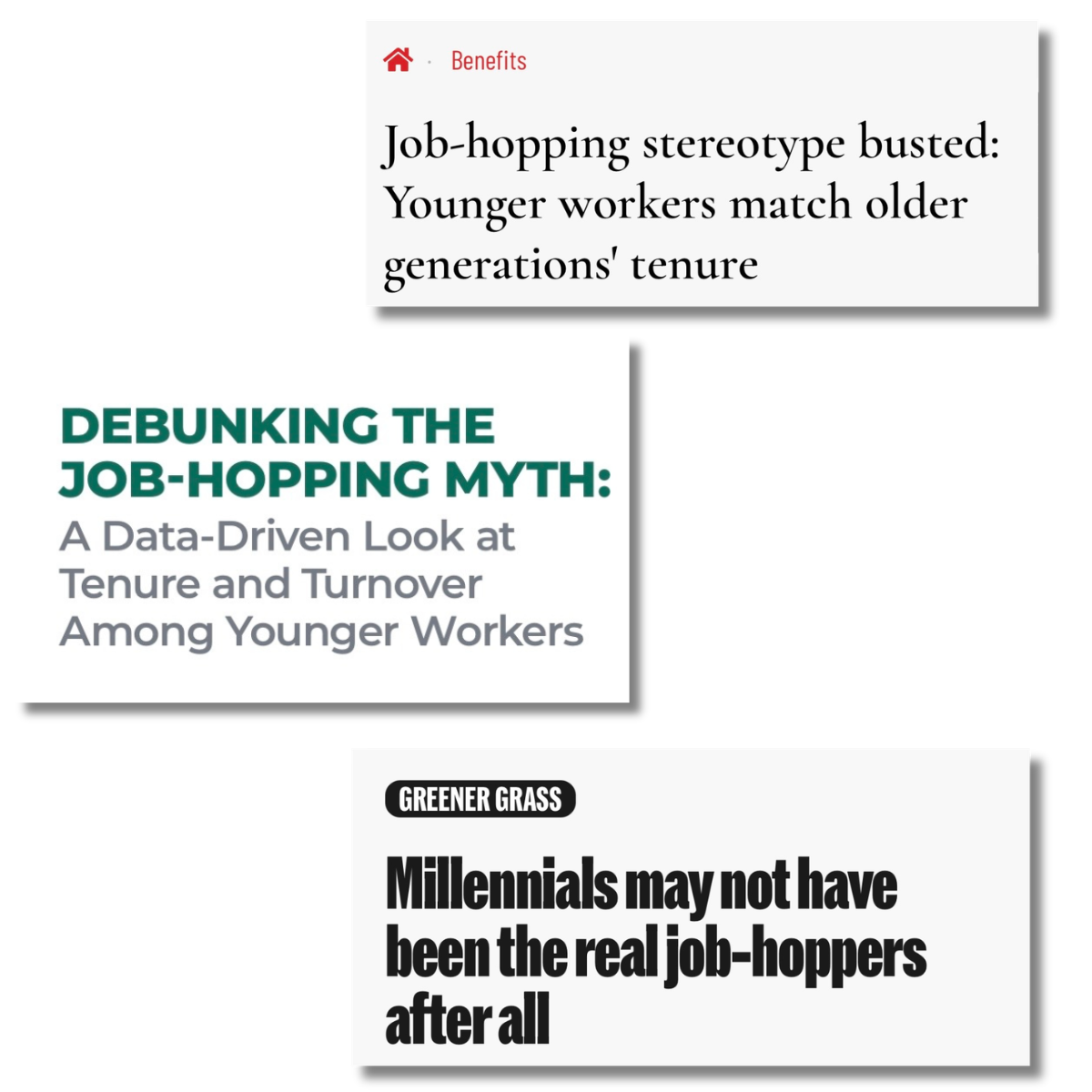
So, phew, we’re off the hook for being fly-by-night workers constantly scanning for better gigs. But wait — is job hopping such a bad thing, really? Why is it viewed as a sign of disloyalty instead of adaptability?
Where should your loyalties lie when it comes to your career?
I’ve spoken with lots of experienced professionals who spend years at companies primarily because they feel they should. They worry that chronic job-hopping will make them look like flight risks to potential employers. Or they fear the risks of making a move — their current job might not be perfect, but at least they know what the drawbacks are. (There's plenty of reasons people are opting for job hugging instead of job hopping.)
The fact is, when loyalty is not working as a two-way street, then it becomes a double-edged sword.
If your employer doesn’t repay you for your efforts (in salary or otherwise), they aren’t honoring their side of the deal. That’s when loyalty is at risk of becoming a “lie.” And with the furious pace of change today, it’s probably best to put your loyalty, above all, with yourself. As the author of How to Win in a Winner-Take-All World puts it: it's sensible to “make sure your degree of loyalty to the company is correctly aligned with the company’s degree of loyalty to you.”
Every so often, run a brief Loyalty Lie Detector Test. You’re not necessarily trying to catch someone for breaking a promise. Instead, this is an exercise for you to examine the reasons to stay where you are vs. why you might want to make a move.

- Make a list of promises, either explicit or implicit, that you believed your current job offered to you when you began. (For example: Gain experience and you will be promoted.) Note: If you're self-employed or freelancing, you can still use this exercise to check whether your work is living up to your expectations.
- Check yourself: Put a * by any promises that came from your own expectations about how things should work, instead of concrete evidence of how things would work.
- For each promise, on a scale of 0-5, rank whether you expect your job will be able to deliver in the next 12 months. If you've recently been through a wave of layoffs, for example, it's unlikely everyone will suddenly get a massive raise.
- Put a "?" by anything you can't rank – these are areas where you need to get more information.
- Review your list. How likely are the promises that brought you to your job to be fulfilled? If you're staring at a list of expectations that will likely remain unfulfilled, it's time to examine if your loyalties would be better placed elsewhere.
Happy navigating,
Bridget
🛶 Career River Connection 🛶
Resources for making your next move